

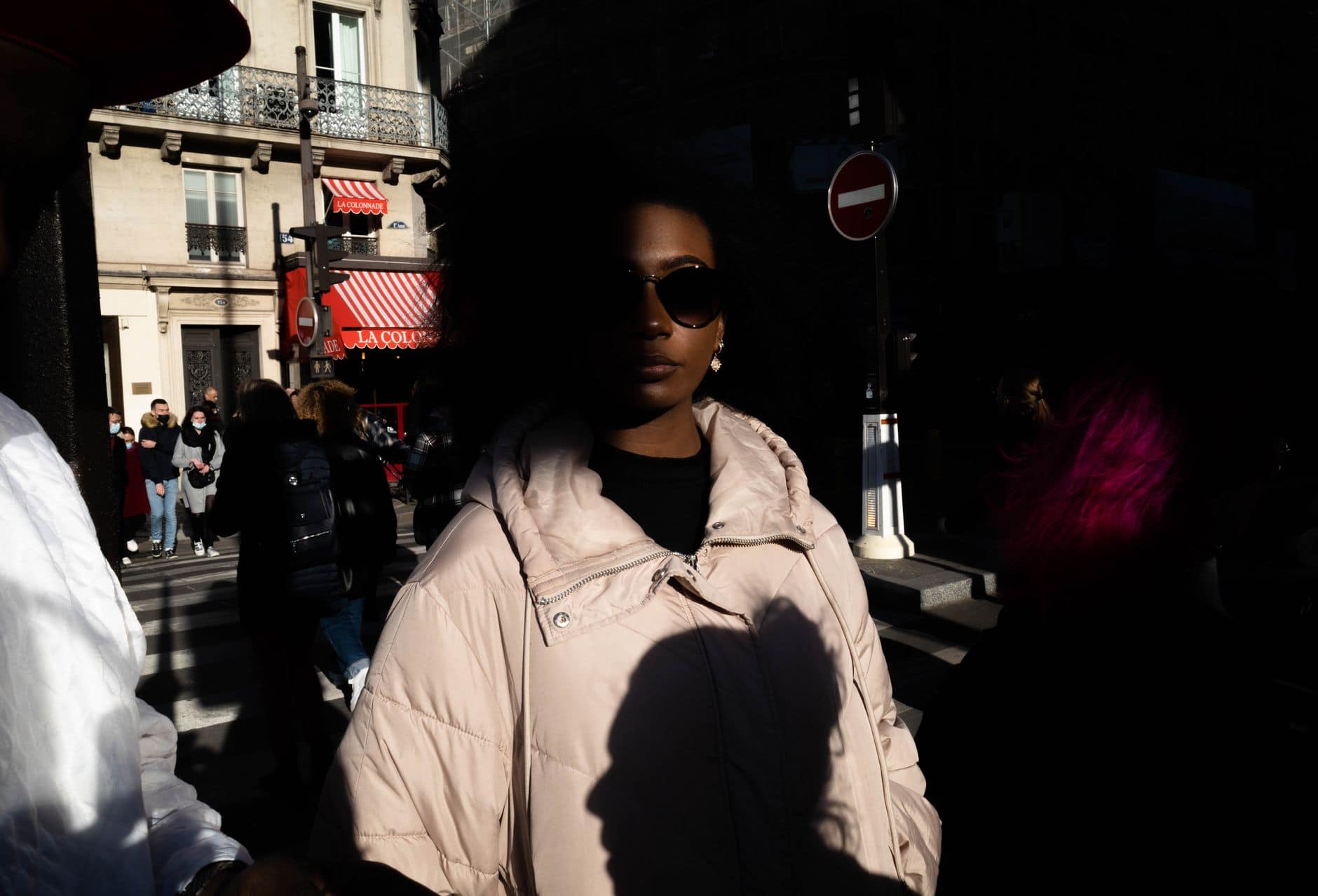
Paris street style has almost nothing to do with what just walked a runway. That’s what most people get wrong before they even land at Charles de Gaulle.
Fashion editors coined the phrase “effortless chic” in the 1960s to describe something they kept seeing on Parisian women who weren’t trying to look fashionable at all. The idea stuck because it was accurate. What those women were doing, without naming it, was dressing for their neighbourhood, their morning walk, their café, not for a trend cycle. That logic still runs the city today, and understanding it is more useful than screenshotting looks from Paris Fashion Week SS25.
One detail puts it in perspective: from what I’ve seen researching this, the average French woman buys meaningfully fewer clothes per year than her American counterpart. Less churn, more intention. That’s the real architecture of the style you’re studying.
What Paris Street Style Actually Means
The term gets used loosely, but paris street style in its original sense describes how ordinary Parisians dress for ordinary days, not how influencers pose outside show venues in October. During Paris Fashion Week SS25 in October 2024, the street-style photographers were certainly busy, but the women walking to the market on Rue de Bretagne were dressed exactly as they always are. That contrast is worth sitting with.
The core principle is restraint with one deliberate choice. A plain wool coat, worn jeans, a good scarf, and one piece that has some real thought behind it, usually a bag or a shoe. Not five interesting things at once. Editors call this “the French edit,” meaning you subtract until something reads clearly. It sounds simple and it genuinely isn’t.
Neighbourhood Dress Codes Decoded
Le Marais and Saint-Germain-des-Prés are the two neighbourhoods people cite most, and they really do dress differently. Le Marais skews younger, and the style there runs to vintage finds, slightly oversized silhouettes, better sneakers, and a willingness to play with colour. You’ll see a lot of Veja trainers (retailing between $120 and $160 depending on the model) worn with tapered trousers rather than leggings. Considered, but not precious.
Saint-Germain-des-Prés reads older and quieter. Navy, camel, off-white. Loafers over sneakers, and a well-cut blazer that probably cost real money and is meant to last a decade. What you almost never see in either neighbourhood is a fast-fashion bag or a logo-heavy outfit, because that signals tourist, not resident.
Other arrondissements have their own codes too. The 9th around Pigalle leans streetwear-adjacent, Montmartre is a little more bohemian, and the 16th is quietly conservative in a way that reads as old money. Worth knowing if you’re trying to dress like you actually live somewhere specific.
Key Pieces Parisians Actually Wear
Veja sneakers replacing stilettos as the default street shoe is probably the most visible shift of the last eight years. Before that, ballet flats held the position. The point isn’t the specific shoe; it’s that there’s always one “correct” shoe signalling you’re paying attention. Right now, Veja in white or cream is that shoe, and at $120 to $160 it’s genuinely accessible compared to what it replaced.
Sézane, founded in 2013 as France’s first online-only label, is another useful reference. Its knitwear, priced mostly between €80 and €140, became shorthand for the Parisian middle register: not fast fashion, not luxury, something you’d actually wear on a Tuesday. The brand’s popularity tells you something about what the market wanted and wasn’t getting elsewhere.
Beyond those, the recurring pieces are a quality trench (Rouje and A.P.C. both do well-regarded versions under €400), straight-leg dark denim, a striped marinière, one good leather bag worn crossbody, and a silk slip dress that works day or evening with the right layering. Not original, but executed with better fabric and less fuss.
Building Your Own Parisian Wardrobe
The capsule wardrobe principle, roughly ten core pieces that rotate together, fits paris street style better than any other dressing framework I’ve come across. Ten sounds restrictive, but in practice it forces you to buy things that actually work together. A client I worked with on a wardrobe edit last year had 60 items and couldn’t get dressed. She cut to 14, and the problem was mostly solved.
Start with neutral base colours: navy, white, camel, grey, black. Add one colour you’ll actually wear repeatedly, not one you aspire to wear. Then pick your shoe (one flat, one slightly elevated) and one bag, and everything else builds from there. Budget-wise, this approach usually costs less over three years than replacing trend-driven pieces every season, even if the upfront spend per item is higher.
I’d be honest about one thing: copying paris street style exactly doesn’t always translate. Context matters. A perfectly worn trench reads differently on a Paris street than in a suburban office car park. The principle is worth borrowing, but the precise execution needs adapting to your actual life.
FAQs
What do Parisians actually wear day to day?
Mostly straight-leg jeans, a quality knit or simple blouse, a flat shoe, and one considered accessory. The look is intentional but not assembled-looking, and changes slowly across seasons rather than chasing monthly trends.
Is Paris street style expensive to copy?
Not necessarily. Sézane, Monoprix, and vintage shops in Le Marais keep prices reasonable. The bigger shift is buying less and spending slightly more per piece, which often evens out within a year.
What colours dominate Paris street style?
Navy, black, camel, off-white, and grey cover most of what you see on an ordinary street day. One accent colour per outfit, worn sparingly, is about as bold as it typically gets.
