

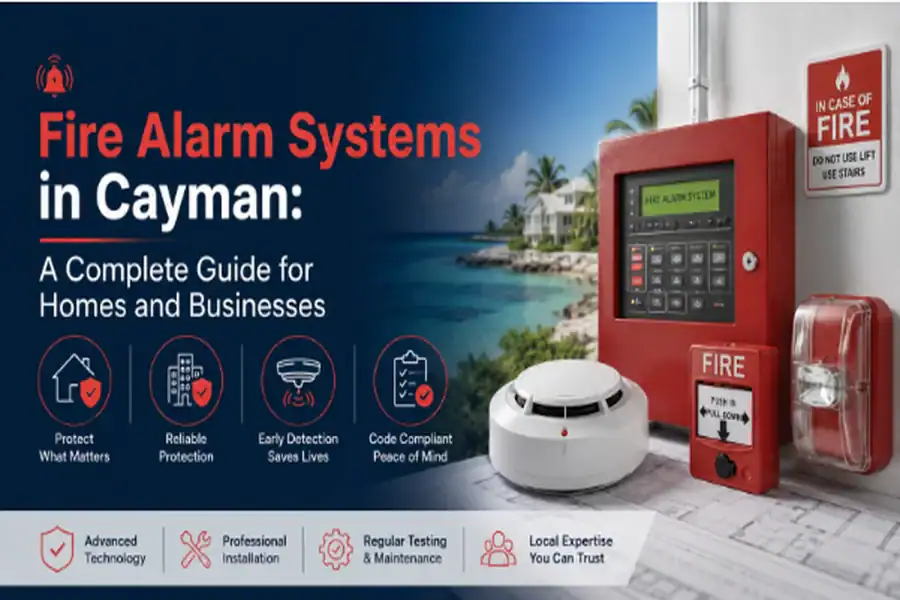
A fire can spread quickly, and the time between detection and response can make a significant difference in protecting people and property. A properly designed fire alarm system provides an early warning, allowing occupants to react quickly and helping emergency teams respond more effectively.
Whether it is a family home, office, retail space, hotel, or industrial facility, every property has different fire protection requirements. Understanding how fire alarm systems work and what factors influence the right choice can help property owners make better decisions when protecting their buildings.
What Is a Fire Alarm System?
A fire alarm system is a network of connected devices designed to detect signs of fire and alert people inside a building. These systems monitor for conditions such as smoke, heat, or manual activation and provide warnings through audible and visual signals.
A typical fire alarm system includes several key components:
Fire Alarm Control Panel
The control panel acts as the main unit of the system. It receives information from connected devices, identifies alarm signals, and manages communication throughout the system.
Detection Devices
Detection devices identify potential fire conditions. Common examples include:
Smoke detectors that identify smoke particles in the air
Heat detectors that respond to increased temperatures
Other specialised detectors used for specific environments
Manual Call Points
Manual call points allow occupants to activate the alarm if they notice a fire before automatic detectors respond.
Notification Devices
These devices alert people inside the building through:
Audible alarms
Sirens
Visual indicators such as strobes
Together, these components work to provide early warning and support a faster response.
Types of Fire Alarm Systems
Different properties require different levels of fire detection. The two common types of systems are conventional and addressable fire alarm systems.
Conventional Fire Alarm Systems
Conventional systems divide a building into different zones. When an alarm is triggered, the control panel identifies the zone where the issue has occurred.
These systems are often suitable for smaller properties with simpler layouts, such as small offices, retail spaces, and residential buildings.
Addressable Fire Alarm Systems
Addressable systems provide more detailed information by assigning a unique address to each connected device. When an alarm occurs, the control panel can identify the specific detector or device that has been activated.
These systems are commonly used in larger or more complex properties, including hotels, commercial buildings, and facilities with multiple floors.
The right choice depends on factors such as building size, occupancy, layout, and the level of monitoring required.
Fire Alarm Systems for Homes and Businesses
While the purpose of every fire alarm system in Cayman is the same, residential and commercial properties often have different requirements.
Residential Properties
For homes, fire protection focuses on protecting occupants and providing enough warning time to evacuate safely.
Important considerations include:
Number of bedrooms and occupants
Kitchen and utility areas
Property size and layout
Placement of smoke and heat detectors
A properly planned residential system helps ensure that alarms can be heard throughout the property when an emergency occurs.
Commercial Properties
Businesses often require more detailed fire protection because they typically have larger spaces, more occupants, and additional risks depending on the type of operations.
Commercial properties such as offices, restaurants, hotels, and warehouses may require:
Additional detection devices
More detailed alarm location information
Integration with other safety systems
Regular inspections and testing
A well-designed commercial system helps protect employees, customers, equipment, and daily operations.
Why Professional Installation and Maintenance Matter
Installing a fire alarm system involves more than placing detectors and connecting devices. The system needs to be designed around the property’s layout, risks, and future requirements.
Working with an experienced electrical contractor in Cayman helps ensure the system is properly planned, installed, tested, and maintained.
Professional installation helps with:
Selecting suitable equipment
Correct placement of detectors
System testing and commissioning
Identifying faults before they become serious issues
Regular maintenance is equally important. Over time, components can experience issues such as battery failures, damaged wiring, or detector faults. Routine inspections help confirm that the system continues to operate correctly when it is needed.
Final Thought
When selecting a fire alarm system, property owners should consider more than the initial installation. Properties in Cayman may also need to consider environmental conditions such as humidity and coastal exposure, which can affect electrical equipment over time.
A system that is correctly selected, professionally installed, and regularly maintained provides better protection and greater confidence for property owners.
